
From Decorum to Discipline: A Generational Study of Modern Masculinity
Published by The Society of Ordinary Gentlemen
Stephen Arnold
3/4/20261 min read
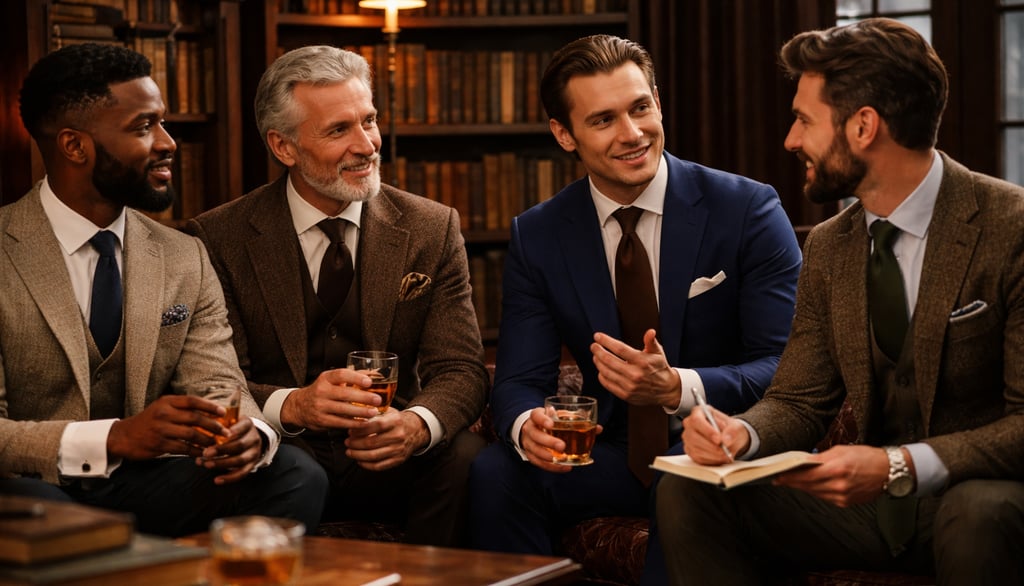
The question is often asked: When did people stop acting like ladies and gentlemen?
The more precise question is: When did society stop intentionally forming them?
In the mid-20th century, social expectations reinforced visible discipline. Personal style was structured. Communication was formal. Public conduct reflected restraint. Men were expected to carry responsibility visibly and consistently.
The cultural revolutions of the 1960s challenged those norms. Authority was scrutinized. Institutions were exposed as flawed. Hierarchies were questioned. The emphasis shifted toward individual expression and liberation from imposed roles.
In many respects, this rebalancing corrected injustice.
But in redefining freedom, society loosened its emphasis on formation.
Personal style became casual rather than intentional.
Communication became expressive rather than measured.
Health became secondary to lifestyle convenience.
Leadership became positional rather than honorable.
Over subsequent decades, informal culture accelerated. Media rewarded immediacy over reflection. The digital age further reduced restraint, amplifying reaction and diminishing self-governance.
The result was not the disappearance of character — but the erosion of structured cultivation.
The Society of Ordinary Gentlemen recognizes that character is not inherited automatically by modern men. It must be taught, practiced, and reinforced.
To cultivate modern gentlemen requires more than teaching etiquette. It requires forming skills, habits, and mindsets that elevate:
Personal style - because presentation communicates respect
Communication - because speech builds or erodes trust
Health - because discipline of the body supports discipline of the mind
Lifestyle - because leadership begins in daily habits
The generational lesson of the late 20th century is not that society rejected virtue.
It is that society stopped systematizing it.
Our vision is not a return to rigid formality.
It is a future in which men are known, in every sphere of life, for character, discipline, refinement, and honorable leadership.
Such men do not emerge accidentally.
They are cultivated.
Through community that sharpens.
Through courses that instruct.
Through mentorship that corrects and strengthens.
The gentleman is not obsolete.
He is unfinished.
And the work of finishing him is deliberate.
Join Us!
Contact
Questions?
One of our Directors will personally reach out to you.
questions@beagentleman.org
© 2026. All rights reserved. The Society of Ordinary Gentlemen